From Five Cooperatives to 156,000 Farmers: The Ethiopian Farming Story Inspiring Africa
Short answer: Ambo Farmers Cooperative Union (AFCU) in Ethiopia's West Shewa Zone began with five primary cooperatives and now serves more than 156,000 farmers through 284 primary cooperatives. Its hybrid maize seed programme reports 184 smallholder farmers growing BH-661 on 160 hectares, with farmers receiving about 80% of their inputs on credit. The lesson for every farmer, in a cooperative or not, is to know your numbers.
StokData Africa | African Agriculture Spotlight | October 2026
Across Africa, farmers are proving that meaningful agricultural progress does not always begin with large investments or sophisticated machinery.
Sometimes, it begins with farmers coming together, sharing resources and finding better ways to grow.
In Ethiopia's West Shewa Zone, Ambo Farmers Cooperative Union (AFCU) offers an inspiring example of what collective agricultural effort can achieve.
Established with just five primary cooperatives, AFCU has grown into an organisation serving more than 156,000 farmers through 284 primary cooperatives.
Its journey demonstrates the potential of organised farming communities to improve agricultural productivity, access to resources and rural livelihoods.
A Farming Network Built Around 156,000 People
According to information published by AFCU in 2026, the union operates across multiple districts in Ethiopia's Oromia region.
Its activities extend beyond bringing farmers together.
AFCU supports agricultural input distribution, improved seed production, mechanisation, animal feed production, dairy activities and food processing.
These services address some of the everyday challenges farmers face: obtaining quality inputs, improving production and finding reliable markets.
For smallholder farmers, access to these services can make a significant difference.
184 Farmers, 160 Hectares and One Ambitious Maize Project
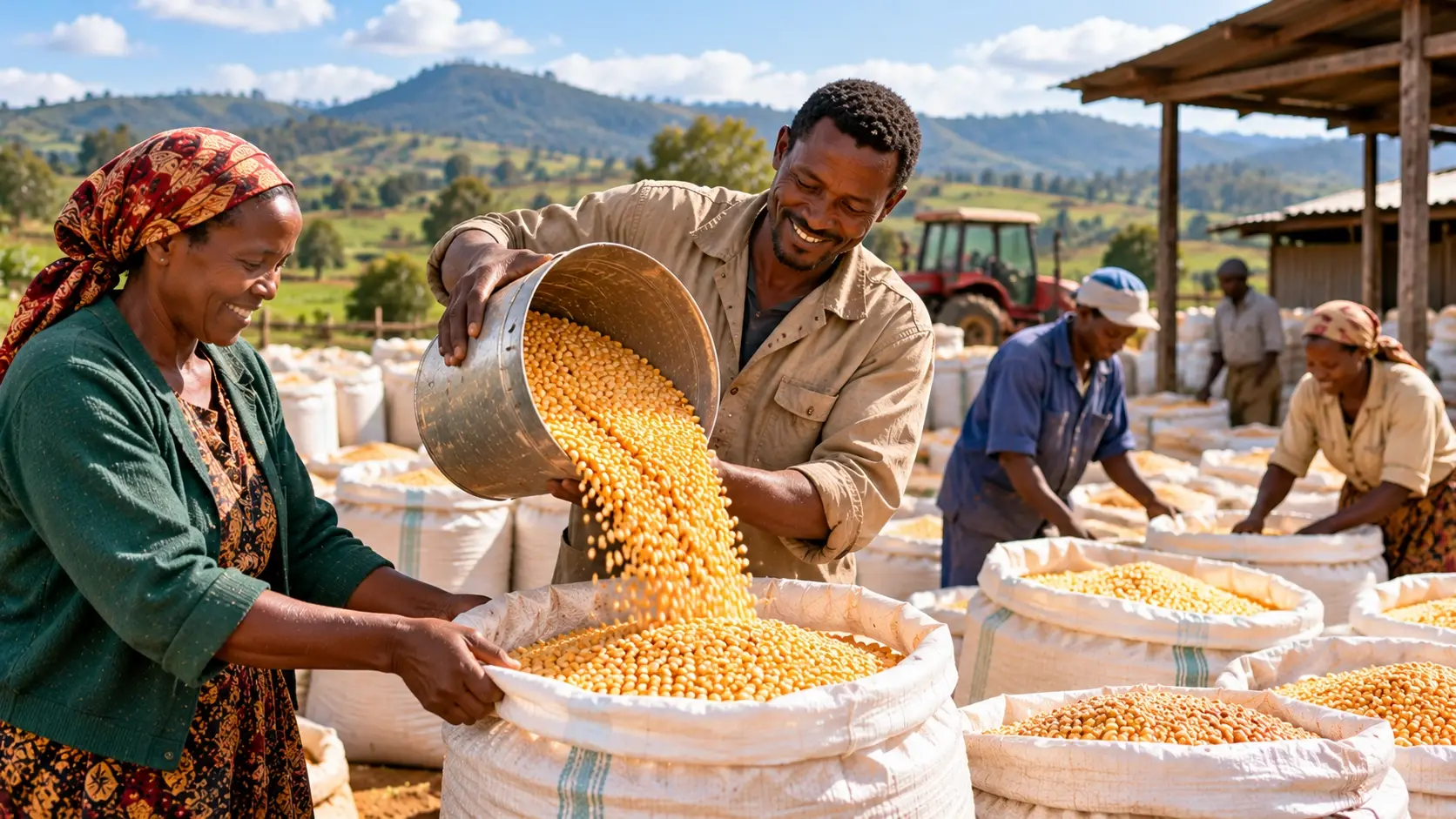
One initiative that particularly caught our attention is AFCU's hybrid maize seed multiplication programme.
In an update published on 3 August 2026, AFCU reported:
- 184 smallholder farmers participating in the programme.
- 160 hectares cultivated with BH-661 hybrid maize seed.
- More than 4,500 quintals of certified hybrid maize seed expected from the harvest.
That projected production is equivalent to more than 450 tonnes of seed, or approximately 2.8 tonnes per hectare.
The 160 hectares also represent an average of approximately 0.87 hectares per participating farmer, although individual land allocations may differ.
These figures highlight the scale of a programme built around smallholder participation.
Importantly, the 4,500-quintal figure was AFCU's production expectation, not a verified final harvest result.
Illustrative image
Why Does Better Maize Seed Matter?
Maize is an important food and agricultural crop in Ethiopia.
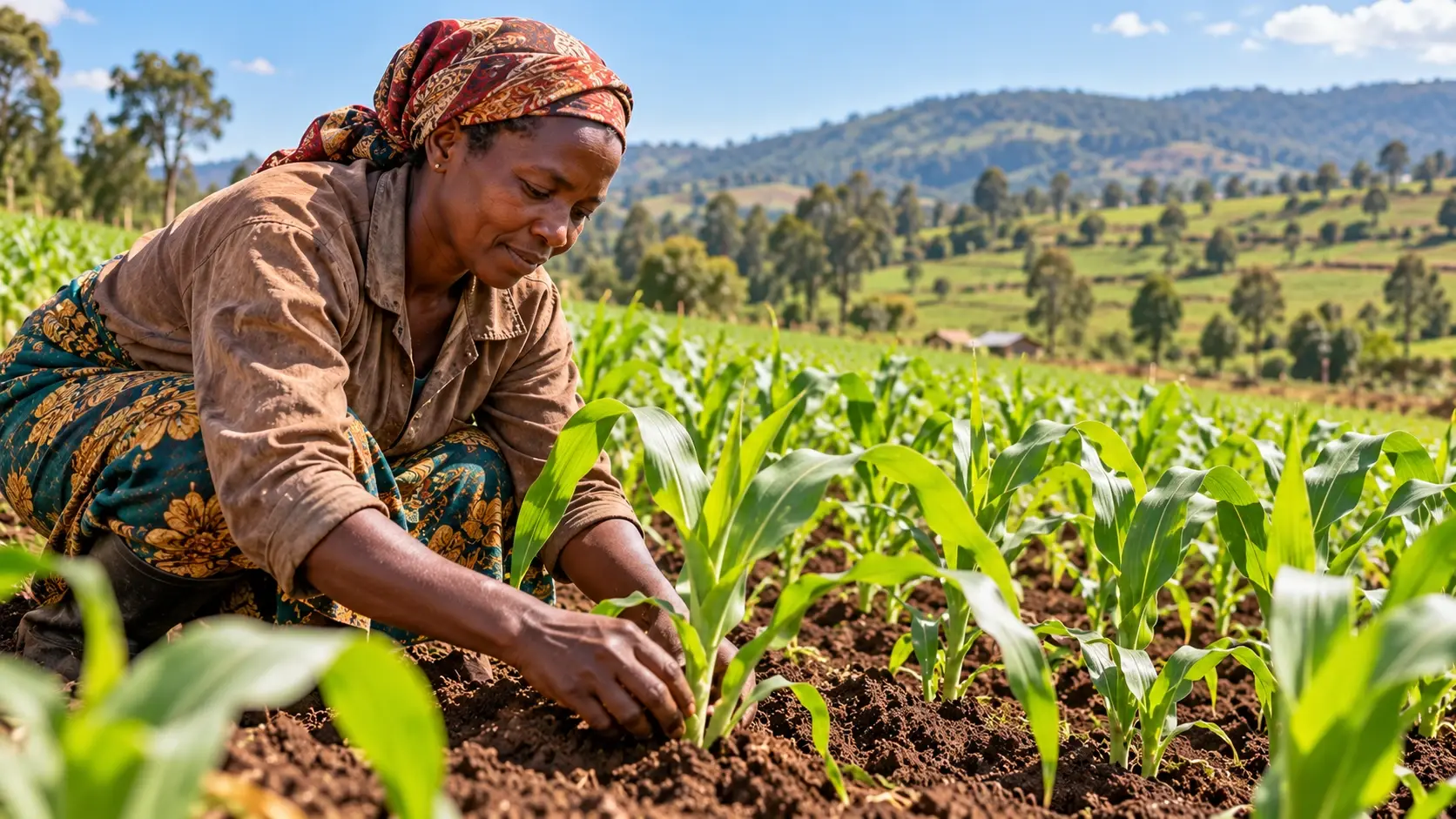
Access to improved, quality-assured seed can help farmers achieve better yields when combined with suitable soil conditions, rainfall and crop management.
Research on Ethiopia's maize seed systems has highlighted the importance of improved varieties and hybrids in addressing agricultural productivity gaps.
Producing quality seed locally can also strengthen domestic seed supply networks and improve farmers' access to planting materials.
For farming communities, this is about more than growing maize. It is about building a stronger foundation for future harvests.
How Can Input Credit Help Farmers Manage Risk?
One particularly interesting aspect of AFCU's maize programme is its approach to agricultural financing and purchasing.
AFCU reports that participating farmers receive approximately 80% of their agricultural inputs through credit arrangements.
The union also provides purchasing arrangements for the seed produced under the programme.
This model can help address two major problems:
Access to inputs: Farmers may struggle to purchase seeds, fertilisers and other materials before receiving income from their harvests.
Access to markets: Farmers can face uncertainty about who will purchase their produce and at what price.
Input credit and planned purchasing arrangements can reduce some of these uncertainties, although farmers must still manage production risks, repayment obligations and market conditions.
The initiative demonstrates how cooperatives can help farmers overcome challenges that would be difficult to address individually.
The Importance of Keeping Good Farm Records
Programmes involving agricultural credit, production targets and purchasing arrangements also highlight an important lesson for farmers everywhere.
Good farming decisions depend on knowing your numbers.
A farmer should be able to answer simple but important questions:
- How much seed and fertiliser did I receive?
- What do I owe for agricultural inputs?
- How much did I spend on labour and transport?
- How much did I harvest?
- What was my cost of production?
- Did I make a profit?
Accurate records can help farmers understand their performance, prepare for financing discussions and evaluate whether their farming activities are financially sustainable.
For cooperatives, reliable records can also support planning, input distribution and production monitoring.
These are valuable lessons for farming communities across Africa.
Illustrative image
How Is AFCU Protecting the Land That Supports Farmers?
AFCU's activities also extend to environmental conservation.
In August 2026, the union reported a joint tree-planting initiative with the West Shewa Zone Cooperative Development Agency.
According to AFCU, approximately 10,000 seedlings were planted at locations including agricultural facilities and production sites.
Tree planting, when suitable species are selected and properly maintained, can contribute to soil protection, erosion control and environmental resilience.
It is a reminder that sustainable agriculture involves caring for the land as well as improving production.
What Can Other African Farmers Learn from AFCU?
AFCU's reported initiatives offer practical lessons that extend beyond Ethiopia.
Farmers benefit when they have access to quality inputs, reliable information, organised markets and opportunities to work together.
But whether a farmer belongs to a large cooperative or manages a small family farm, understanding farm performance remains essential.
Recording expenses, tracking production and calculating profitability can help farmers identify problems early and plan their next season with greater confidence.
A farmer who knows the cost of producing a bag of maize is better positioned to evaluate selling prices than one who relies on guesswork.
And a farmer who keeps accurate livestock records can make better-informed decisions about breeding, animal health, feed and sales.
Why This Story Inspires StokData Africa
At StokData Africa, stories like AFCU's remind us why we believe African farmers deserve practical, accessible agricultural technology.
StokData Africa was created to help farmers organise their farming information and understand how their businesses are performing.
The platform supports livestock, poultry and crop records, production tracking, farm expenses, sales and profitability insights.
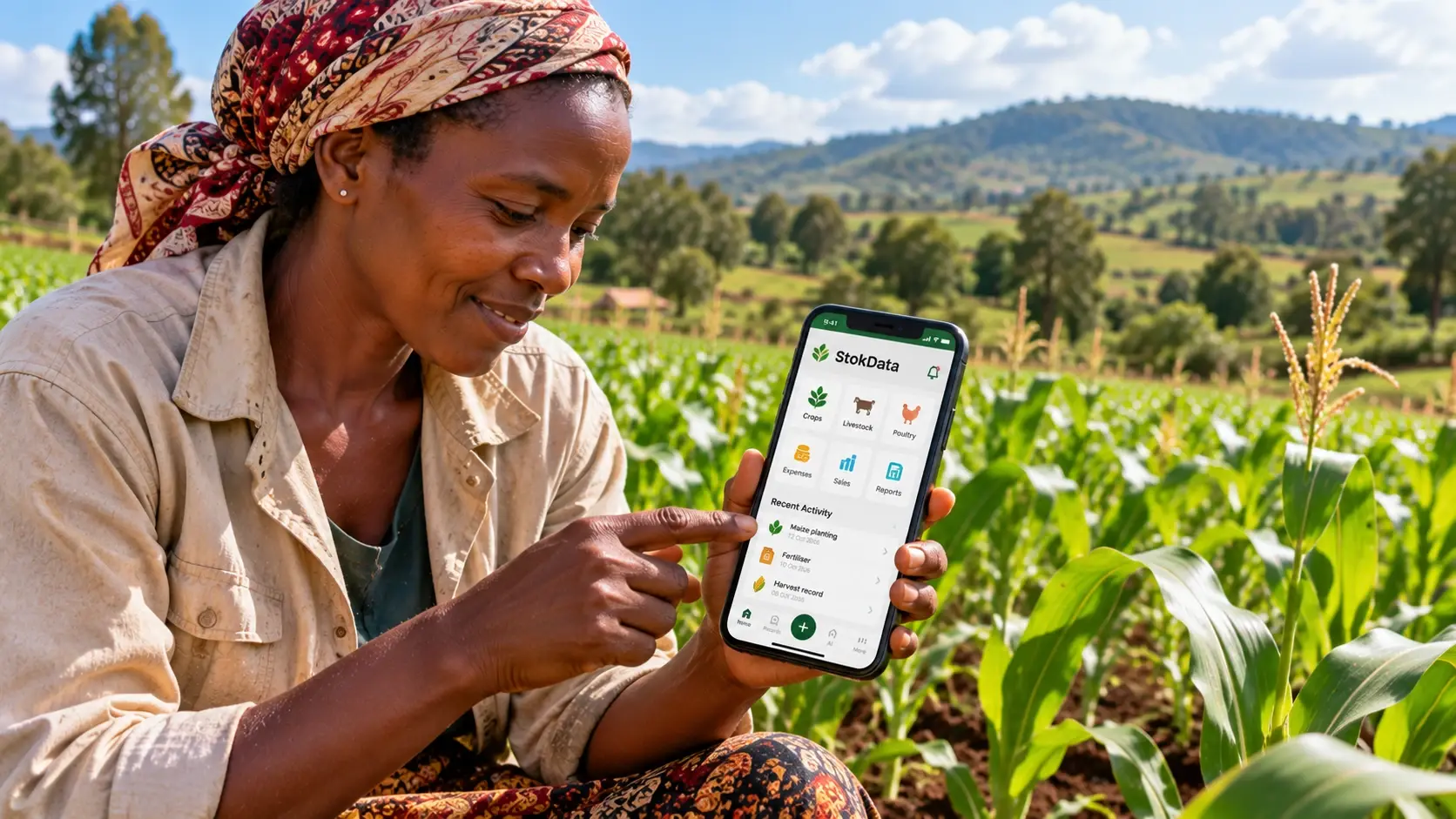
Farmers can also use StokData AI to help them understand their farm information, while offline functionality makes the platform useful in areas with unreliable internet access.
For example, a maize farmer can record planting inputs, labour expenses, harvest quantities and sales, then use those records to evaluate the financial performance of the crop.
The goal is simple: help farmers spend less time guessing and more time making informed decisions.
We believe technology should support the hard work farmers are already doing, not make farming more complicated.
Celebrating the People Building Africa's Agricultural Future
Ambo Farmers Cooperative Union's story is one of organisation, agricultural ambition and community participation.
From its beginnings with five cooperatives to its reported network of more than 156,000 members, AFCU demonstrates the potential of farmers working collectively towards shared goals.
Across Africa, many other cooperatives, farmer groups and agricultural organisations are doing important work that deserves recognition.
At StokData Africa, we want to continue highlighting these stories.
Because improving African agriculture is not the responsibility of one company, organisation or government.
It is a shared effort involving farmers, communities, agricultural institutions and innovators.
When African farmers grow, Africa grows.
Frequently asked questions
What is Ambo Farmers Cooperative Union (AFCU)?
AFCU is a farmers' cooperative union in Ethiopia's West Shewa Zone. It started with five primary cooperatives and, according to its published information, now serves more than 156,000 farmers through 284 primary cooperatives.
How many farmers take part in AFCU's hybrid maize seed programme?
AFCU reported 184 smallholder farmers cultivating 160 hectares of BH-661 hybrid maize seed, an average of approximately 0.87 hectares per farmer. Individual land allocations may differ.
Is the 4,500-quintal figure a final harvest result?
No. More than 4,500 quintals of certified hybrid maize seed was AFCU's production expectation, not a verified final harvest result.
What records should a maize farmer keep?
Inputs received, amounts owed for inputs, labour and transport spending, harvest quantities, cost of production and profit. StokData Africa's offline farm management app lets farmers record these even where internet access is unreliable.
About StokData Africa
StokData Africa is a digital farm management platform designed to help African farmers manage livestock, poultry, crops, production, expenses and profitability.
Sources
- AFCU – Cooperative Information — 18 March 2026.
- AFCU – Hybrid Maize Seed Multiplication Programme — 3 August 2026.
- AFCU – Tree-Planting Initiative — 3 August 2026.
- AFCU – Background — 16 March 2026.
- FAO AGRIS – The Formal Seed System of Maize in Ethiopia — 2024.
Editorial disclosure: This is an independent article published by StokData Africa using publicly available information. StokData Africa is not affiliated with, endorsed by or representing Ambo Farmers Cooperative Union. AFCU's reported activities are presented for informational purposes and do not imply any commercial relationship between the organisations.